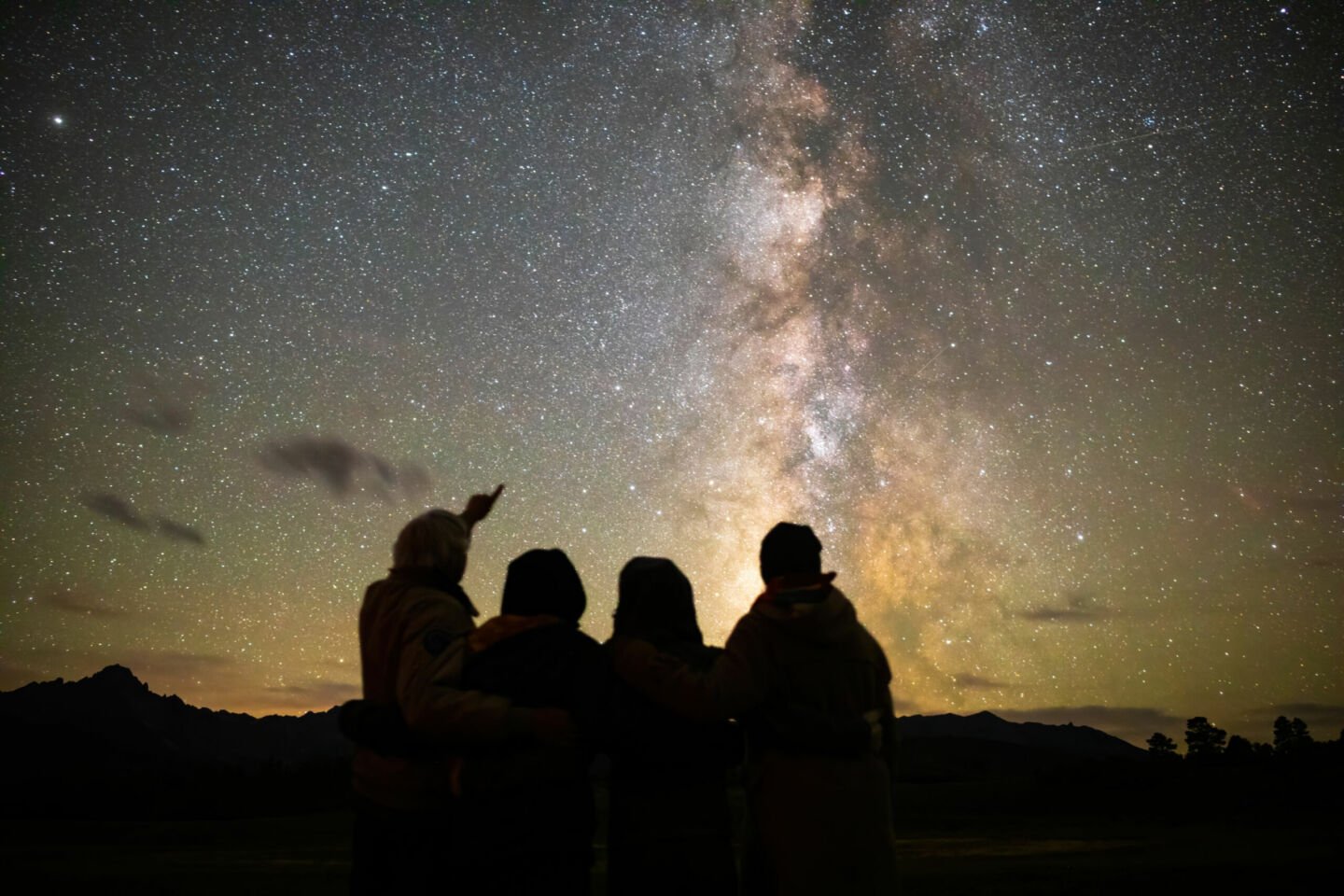











Our annual awards recognize dark sky advocates around the world working to protect the nighttime environment.
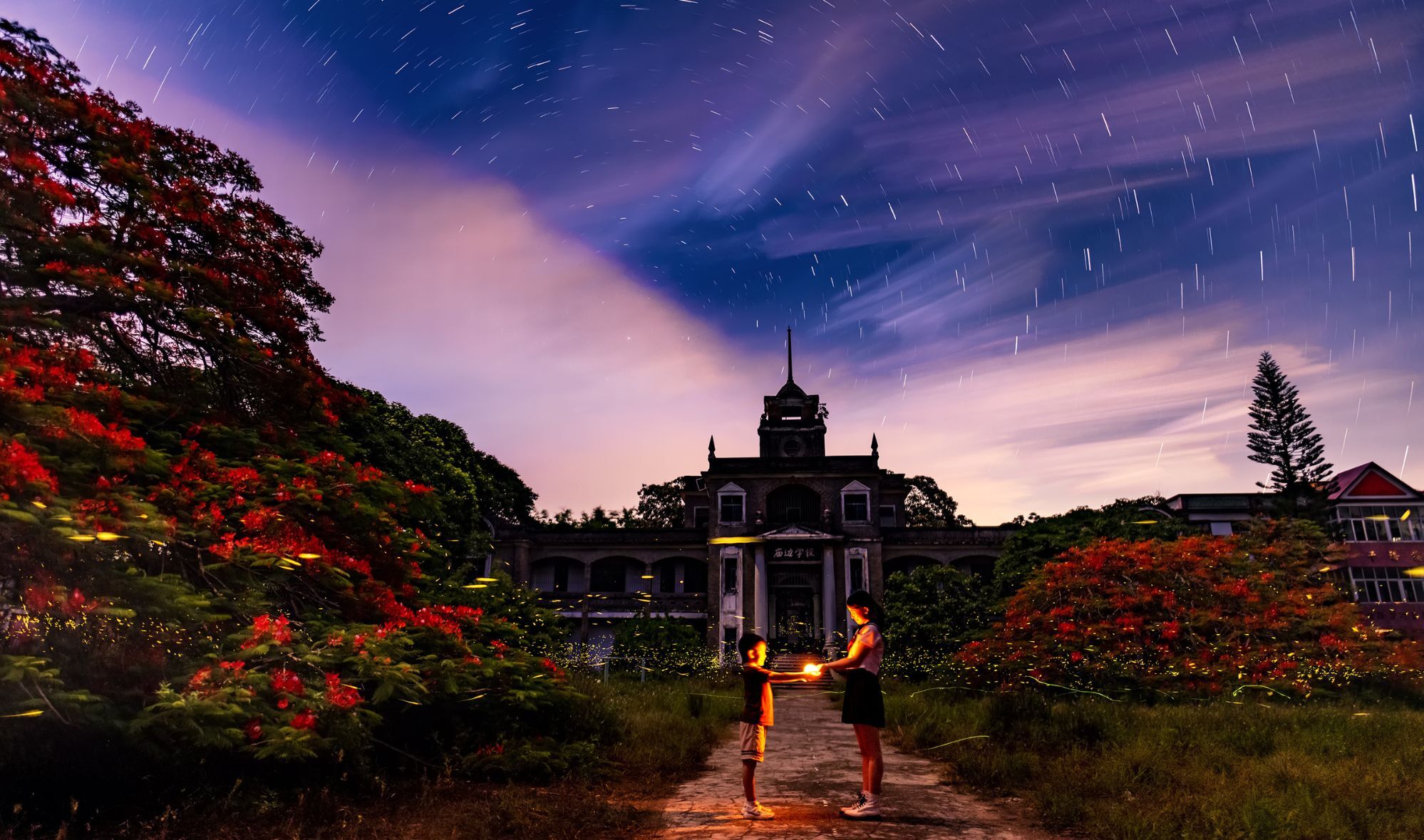
Do you know a dark sky advocate or passionate defender of the night who deserves recognition?
DarkSky’s Annual Awards honor the people, places, and communities leading efforts to protect the night from the harmful impacts of light pollution. These awards highlight the inspiring work being done across the globe to preserve dark skies and the nighttime environment.

Whether someone has spent a lifetime dedicated to the movement, recently introduced innovative lighting solutions, or is an emerging voice in the conversation, we want to celebrate their impact. Award categories also recognize outstanding efforts within International Dark Sky Places and partnering organizations, such as lighting design firms, whose work supports DarkSky’s mission.
Help us recognize those making a difference.
Nominations for the 2026 DarkSky Awards open May 1, 2026, celebrating individuals, organizations, and communities making meaningful contributions to protecting the night and advancing responsible outdoor lighting around the world. Nominations close at the end of June.
Once nominations close, the DarkSky Awards Committee reviews all submissions and presents its recommendations to DarkSky’s Board of Directors for final approval. Recipients will be announced during Under One Sky 2026, DarkSky’s global conference.
Each awardee will receive:
• A personalized award
• A congratulatory letter from DarkSky’s President and Executive Director
• One year of complimentary DarkSky membership.
Commemorates DarkSky Cofounder and former Executive Director Dr. David L. Crawford, and DarkSky Cofounder and former Board President Dr. Tim B. Hunter for their pioneering leadership in protecting the night sky and reducing light pollution, and for the indelible mark they have left. This award represents the highest honor that DarkSky bestows to individuals who, in the course of their lifetime, have contributed an extraordinary effort to light pollution abatement.
Nominating criteria — Nominations must include the individual’s name, the number of years they have been active in light pollution abatement education, and the supporting rationale for the lifetime achievement award (i.e., CV or résumé, significant achievements in recent years). Only one award will be given each year.
Honors Dr. Arthur Hoag and William T. Robinson for their work as pioneers in outdoor lighting reform. This award is given to an individual who has been outstanding in educating governmental organizations, businesses, and the public about the merits of outdoor lighting control ordinances.
Dr. Arthur Hoag, who received his Ph.D. in astronomy from Harvard University in 1952, was one of the founders of the dark sky movement. Dr. Hoag led the cause against light pollution at Kitt Peak in the 1960s and early 1970s. His efforts, together with those of the astronomers he led, resulted in the adoption of an outdoor lighting ordinance in Tucson and Pima County in 1972.
William Robinson was a retired petroleum engineer experienced in technology and negotiation when he met Dave Crawford at Kitt Peak National Observatory. Shortly thereafter, he came out of retirement to become a volunteer for dark sky preservation in southern Arizona. Passionate and tireless, Mr. Robinson was instrumental in the adoption of no less than 50 outdoor lighting control ordinances throughout Arizona that included most incorporated communities, all state counties, and the state itself.
Marge Hoag and Mary Robinson, the widows of Dr. Arthur Hoag and William Robinson, respectively, have agreed to the use of their husbands’ names for this award.
Nominating criteria — Nominations must describe the individual’s outstanding work in educating governmental organizations, businesses, and/or the public about the merits ofoutdoor lighting control ordinances. Only one award will be given each year.
Given “in recognition of outstanding achievements in research or academic work on light pollution over a multiple-year period. Past awards have recognized research in fields such as atmospheric physics and artificial skyglow; ecological sensitivity to light pollution; and citizen-science measurements of light pollution.
Nominating criteria — The nomination must describe the individual’s outstanding achievements in research or academic work on light pollution over a multiple-year period, and should include a link to the nominee’s relevant published research e.g. via Google scholar or ResearchGate. Only one award will be given each year.
Given to individuals, organizations, or businesses that — through technological innovation and entrepreneurship — support DarkSky and its mission to preserve night skies by promoting the protection of dark skies and quality outdoor nighttime lighting. Only one award will be given each year.
Nominating criteria — Nominations may be made for an individual designer or business. Awards are given for innovative products that support the protection of dark skies and quality outdoor lighting of any kind and for any application. Multiple submissions may be made. Submissions can be for lighting products or products that take the place of internally illuminated products. Products should be commercially available.
Each submission must include a statement explaining the reason for the submission and must provide sufficient information and details about the product and its intended use in order for the Awards Committee to professionally assess the submission. Submissions must also include the full published specification data, including cut sheets and, if applicable, photometric files for evaluation. Each entry must include up to five high-resolution color digital images — taken both at night and during the day — showing the product both on its own and in use, including general views to assess overall design and detailed views of the system’s features. Entries without sufficient information and details will be rejected.
DarkSky considers the following criteria: freedom from glare, aid in achieving rational lighting levels, energy efficiency, provision of good nighttime ambiance, minimal obtrusive light, and minimal contribution to sky glow.
Submission of an application constitutes permission by the submitting parties for DarkSky to use submitted images to publicize the awards and promote quality outdoor lighting.
Given to individuals and organizations in appreciation and recognition of their exceptional efforts to promote and advance the mission and programs of DarkSky to preserve night skies by promoting quality outdoor nighttime lighting to reduce light pollution and its environmental impacts. Nominees include those who have led outstanding public education and outreach campaigns on light pollution, who have promoted ordinances and other regulatory methods to reduce light pollution, who have worked with the media, policy makers, opinion leaders, and others to bring greater urgency to the issue, and who have fostered collaborations with disparate stakeholders to effect positive change.
Nominating criteria — Nominations may be made for an individual or organization and must describe the nominee’s exceptional efforts to promote and advance the mission and programs of DarkSky. We will give 7 awards from 7 different countries, with a goal of representing all 7 continents.
Honors one or more students of any grade level from elementary school through undergraduate university who demonstrate an enthusiasm for and commitment to dark sky conservation and/or research into the nocturnal habitat, human health, safety, security, or other areas in the context of natural darkness and light pollution. A student may conduct their activities as part of a science fair or other school-based project, as a member of a community service organization, in partnership with a non-profit, or coordinated with a local, state, provincial, or national park or other protected natural area. No more than three awards will be presented annually.
Nominating criteria — Nominations may be made for any student or group of students and must describe how they demonstrate enthusiasm for and commitment to dark sky conservation and/or research in the context of natural darkness and light pollution.
Honors Bob Gent, an active and influential dark sky advocate, who passed away in March of 2019. Bob was a longtime volunteer and friend of DarkSky and wrote the original Chapter Handbook. In 2017, he founded DarkSky Ohio (U.S.A.) and led state-wide efforts to protect the natural nighttime environment.
This award is given to any member of the DarkSky advocacy community, including Chapter leaders, Delegates, and Advocates, who has demonstrated outstanding achievement in combating light pollution and fostering support for DarkSky’s mission and programs. Of particular interest are DarkSky Chapters, DarkSky groups, or chapter members who have built strong and effective communities around light pollution and its environmental impacts, and who have raised awareness of the issue through exceptional outreach and education programs.
Nominating criteria — Nominations may be made for members of the DarkSky advocacy community, including Chapters, chapter leaders, chapter members, Delegates, and Advocates, and must describe how the nominee has demonstrated outstanding achievement at the local level in combating light pollution and fostering support for DarkSky’s mission and programs. Only one award will be given each year.
his award recognizes individuals or entities whose decisive actions have been instrumental in conserving and protecting terrestrial and/or aquatic wildlife species sensitive to artificial light at night. Qualifying efforts include restoring natural nocturnal conditions in protected areas by eliminating unnecessary lighting or implementing smart lighting practices onsite; actions leading toward the protection of certain species sensitive to artificial light at night using policies, guidelines, best practice documents, and similar; outreach events or educational activities promoting wildlife and biodiversity in nocturnal landscapes.
Nominating criteria — Nominations may be made for an individual or entity. Submissions must include a description of those efforts to protect the natural nocturnal environment and/or species sensitive to artificial light at night. Besides description, the nomination can include examples of smart lighting principles that are adopted or integrated into urban or natural areas, together with the list of species that are benefiting from it; or any existing legal or administrative restrictions or designations (e.g., policies, guidelines, best practice documents, conservation easements, land management conservation plans, designated critical habitat); detailed description of outreach event or educational activities that are aiming at promoting wildlife and biodiversity in nocturnal landscapes). Only one award will be given each year.
Given in recognition of a recent exceptional achievement to an International Dark Sky Place (IDSP) that has been established for at least three years. For example, an IDSP could be recognized for a major reduction in lighting inside or near the IDSP, for IDSP-led adoption of stricter lighting codes by communities in the buffer zones or in a major city affecting the sky quality of the IDSP, for especially innovative or successful programs or actions within the IDSP, or for major contributions to the IDSP program.
Nominating criteria — The International Dark Sky Places Committee will nominate eligible Places for review by the Awards Committee.
The award is presented to individuals, organizations, institutions, museums, art galleries, and/or any entity celebrating dark skies heritage through its artistic and/or cultural form, whether through literature, painting, installations, exhibitions, or video projections. These creative pieces should inspire the public to recognize the importance of the natural darkness and starry skies, or to present the negative consequences of light pollution.
Nominating criteria — Тhe creative piece should be directly connected to the dark skies, natural darkness, or light pollution; it can be presented in any form, from literature, poetry, paintings, videos, artistic installations, performance to art exhibitions and similar; it should be available to public; author/s should make a clear connection to the dark skies and/or light pollution; it’s desirable to have some form of community engagement
Submissions may be made online by following the links above. Please be prepared to submit your personal contact information, the nominee’s current phone number, email, and mailing address, and the nomination criteria specific to each award. With the exception of the Lighting Design and Technological Innovation Award and the Dark Sky Place of the Year Award, self-nominations will not be accepted. DarkSky staff and members of the DarkSky Board of Directors are not eligible to receive DarkSky Awards.
Each nominee will be considered for a period of two years from the date of their initial nomination. After that period, nominators will be invited to submit an updated nomination with new information if they wish for their candidate to be reconsidered. Competition among nominees is exceptionally strong, and this approach allows us to properly recognize outstanding candidates who may not receive an award during their initial year of consideration, while ensuring the nomination materials remain current and comprehensive.
A DarkSky Awards Committee made up of DarkSky directors, Chapter leaders, DarkSky members, supporters, and previous award winners has been selected to review and approve the final slate of award recipients and present its recommendations to the DarkSky Board for ratification.
Committee deliberations are confidential, and no aspects of the deliberations or the process will be discussed with non-committee members outside the confines of the committee work.
In any given year, if there are not enough candidates or no candidates who merit nomination for a particular award, the committee may recommend that no award be given that year. The decision not to present an award will be made by a simple majority vote of the committee, with its recommendation presented to the Board for final action. Applications for award nominations can be carried forward one year from the submission year.
Award winners will be notified by October 1 each year. The awards are then publicly announced during a special awards presentation at Under One Sky, DarkSky’s global conference.
List of all previous DarkSky Award recipients here
2025 DarkSky Awards recipients
2024 DarkSky Awards recipients
2023 DarkSky Awards recipients
2022 DarkSky Awards recipients
2021 DarkSky Awards recipients
2020 DarkSky Awards recipients
2019 DarkSky Awards recipients
2018 DarkSky Awards recipients
2017 DarkSky Awards recipients
2016 DarkSky Awards recipients
2015 DarkSky Awards recipients