













Photo © Wally Pacholka


Frequently Asked Questions


To skip ahead to one of the following questions, just click on the link below:


Q: What is the International Dark-Sky Association?  What do you do?  What are your goals?


A: Established in 1988, the International Dark-Sky Association is an educational, environmental 501(c)(3) nonprofit dedicated to protecting and preserving the nighttime environment and our heritage of dark skies through quality outdoor lighting.  With thousands of members in more than 70 countries, IDA is the leading authority concerning the problems and solutions related to light pollution.

We work to stop light pollution's adverse effects, raise awareness about those adverse effects and their solutions, and educate the public about the value of keeping the night sky natural.

  • We work directly with lighting companies to explore new avenues of technology and create products that are energy efficient and fully shielded -- that direct the light downward, where it is needed, rather than upward, where it contributes to sky glow and other forms of light pollution. More information on the best types of lighting is available in our Best Choice Lighting banner.
  • We offer information and advice to activists and citizens concerned about light pollution in their community by proposing a number of approaches to regional legislation. Our Lighting Ordinances page offers a comprehensive look at light pollution laws around the globe.
  • Educational and outreach tools including lesson plans, activities, brochures, and PowerPoint presentations are available for download. Look for them in our Educators/Kids banner. We also distribute an award-winning quarterly newsletter to members. Read the current issue on our Nightscape Newsletter page.
  • IDA volunteers form Sections to advocate for natural night skies in a specific region. More information on Sections is available in the next question or the Sections page. IDA Affiliates are independent organizations that work in conjunction with IDA to keep skies natural.


Our unified approach supports the individual and collective efforts of our members and others who advocate quality outdoor lighting.  We work with communities, astronomers, ecologists, and lighting professionals at the local, national, and international level.


Q: What are IDA Sections? How do they help reduce light pollution? 


A: IDA Sections can be found all over the world. Sections are regional groups that advocate to reduce light pollution in their area. Section members are volunteers who raise awareness of light pollution in their community using their own materials and materials provided by IDA. Dedicated Section Leaders and members are the stars of IDA, and have made incredible progress in the fight against light pollution by passing legislation, improving public lighting, and celebrating dark skies.


A new Section can be formed by any IDA member. The only qualification necessary to lead a Section is your passion to advocate for natural night skies. Though they are all part of IDA, Sections enjoy a vast amount of autonomy and specialize in different areas. Some Sections focus on night sky friendly lighting and legislation, while others enjoy giving educational presentations to schoolchildren and civic groups. There are countless ways to make a difference.


The first step to create a Section is to fill out an application form and submit it to IDA headquarters. The IDA Sections Coordinator will be happy to provide insight and assistance on everything else.


Download an application form now.


Q: What is light pollution?


A: Light pollution is any adverse effect of artificial light, including sky glow, glare, light trespass, light clutter, decreased visibility at night, and energy waste.


Light pollution wastes energy, affects astronomers and scientists, disrupts global wildlife and ecological balance, and has been linked to negative consequences in human health. Read on to learn more about specific issues.

Photo © Wim Schmidt


Q: How does light pollution affect astronomers?  What can be done about it?


    Photo © Guillaume Poulin

A:  Two elements of light pollution affect astronomers most: sky glow and light trespass.

Sky glow is a result of fixtures that emit a portion of their light directly upward into the sky where light scatters, creating an orange-yellow glow above a city or town.  This light can then interfere with sensitive astronomical instruments designed to capture light from distant galaxies.

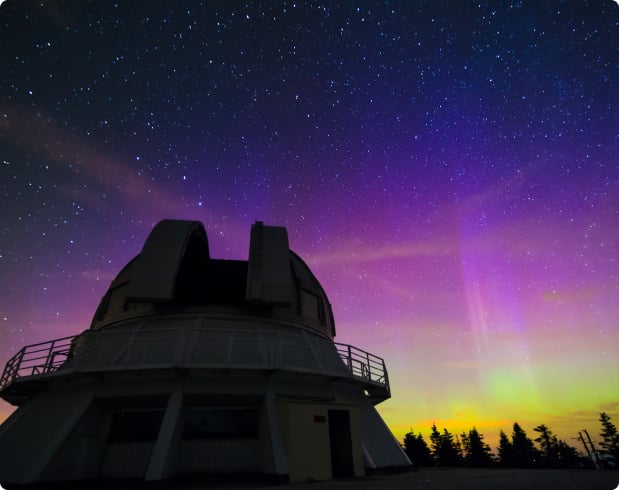
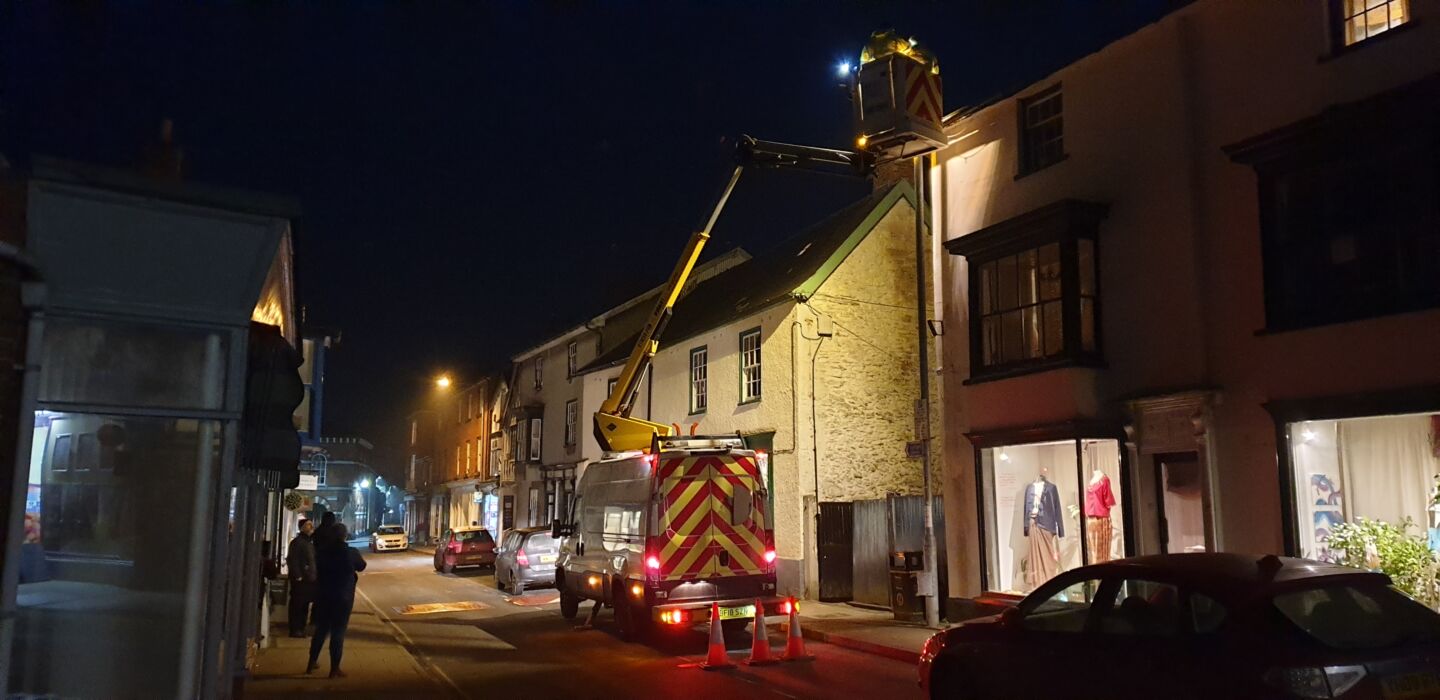
Light trespass occurs when poorly shielded or poorly aimed fixtures cast light into unwanted areas, such as an observatory, buildings, neighboring property, and homes.  This light also interferes with astronomical instruments.

To prevent sky glow and light trespass, use fully shielded light fixtures--those that put light only where it is wanted and needed, not wastefully into the sky or annoyingly onto neighboring properties.


Also, certain light sources are more "astronomically friendly" than others. Because the near monochromatic yellow of low sodium pressure lighting is easily filtered out, it is preferred for use near observatories.  But  the spectrally polluting white light of metal halides is very disruptive around observatories


 Photo © IDA   Photo © George Gentry  Photo © Charles H. Smit

Q:  Does light pollution affect the surrounding ecological community?


A: Absolutely.  Artificial light at night has been shown to affect the mating, migration, and predation behaviors of many different species and, consequently, the ecological community as a whole.  For example:

Lighted towers and tall buildings can so confuse migrating and local birds that they collide with other birds or structures or circle the lights until they die of exhaustion. Bats and moths are affected, as well.

Sea turtle hatchlings
are naturally attracted to the ocean by the light of the moon, which is intended by nature to be the brightest light on any given night; but coastline lighting confuses them.  It lures them away from the ocean and towards the dangers of roads and predators.

Night lighting that increases sky glow around sports stadiums can stop the mating activity of nearby frogs.

Artificial lighting reduces visibility of species that communicate through light (bioluminescent flashes), such as glowworms and fireflies.

Use of intense lights for fishing at night on the ocean or along the shoreline attracts large numbers of fish, a method that leads to over-fishing and contributes to the decline of fish worldwide.


  Photo © U.S. Fish and Wildlife Service  

Whether outdoor light is directly adjacent to a species habitat or located at some distance, as through sky glow, the combined effects of artificial lighting on vast numbers of nocturnal species have the potential to disrupt the functioning of entire ecosystems by disrupting balances in competition and predation.

More information on environmental effects of light pollution on wildlife and in other areas can be found through our Information Sheets.


Q: I need a "dark sky friendly" fixture for my home (or business).  Where can I find one?


A: There are many IDA-Approved™ dark sky friendly light fixtures screened through our Fixture Seal of Approval program. These fixtures have all been reviewed to ensure that they minimize light pollution.  Look in your local home improvement or hardware store for our Fixture Seal of Approval. If they don't carry them, ask that they do!


  Photos © International Dark-Sky Association

Careless outdoor lighting can trespass onto neighboring property and into neighbor's homes, disrupting important healthy sleeping patterns.

Q: Is it true that light at night may be harmful to me?


A: Specified periods of light and dark, known as circadian rhythms, are essential for good health for life on Earth, including humans.  As an example, health researchers have recently established that exposure to artificial light at night reduces the human body's production of melatonin, the hormone that tells the body's organs and systems that it is dark.  Reduced levels of melatonin promote growth of breast tumors in women and may similarly affect other cancers, including prostate cancer. The World Health Organization's International Agency for Research on Cancer has listed "shiftwork that involves circadian disruption"  among agents and exposure circumstances that are "probably carcinogenic to humans."

Q: My neighbor's light shines into my home.  What can I do?


A: Begin by talking with your neighbor (en español). Explain how the light disturbs you.  Ask why the light was installed and whether it is achieving its purpose.  Suggest a lower wattage, fully shielded light with a timer and/or motion sensor as a way to light property for security but with minimal affect on neighbors.

If a personal appeal fails, check with your community's land use planning and zoning department as to whether it has a lighting ordinance regulation that may demand remedy.


Your gift of an IDA Membership to a neighbor can be used to "break the ice" and to help spread the word about the work IDA does to help preserve and protect the night skies. Your gift will prompt your neighbors to visit the IDA Web site which will alert them to your situation. Your gift will allow us to strengthen our worldwide efforts to control light pollution. When you give an IDA gift membership, your giftee will receive our quarterly Nightscape magazine, the bimonthly e-News, and they will receive a new member packet welcoming them to IDA.  Give a gift today.


Photograph © International Dark-Sky Association

Q: What can I do to reduce light pollution?


A: Please remember, dark sky friendly lighting does not mean dark ground.Use outdoor light at night only when and where it is needed and at appropriate lighting levels.  Use fully shielded, light efficient fixtures aimed directly at the ground.  Incorporate timers and sensors to shut off lights when not needed.

Become an activist by joining, donating, or even starting a local Section of IDA in your area.


 Photo © Babak Amin Tafreshi

Q. I need a list of dark sky places that would be good to visit on my next vacation.  Where can I find such a list?


A. There are a couple of places for your look such as the Dark Sky Finder for North America which requires Firefox to use.  Or visit the National Park Service Web site, Dark Sky Finder from Canada, or the Chinzano Report.


Q: Do you advocate shutting off the lights that keep our neighborhoods safe and secure?


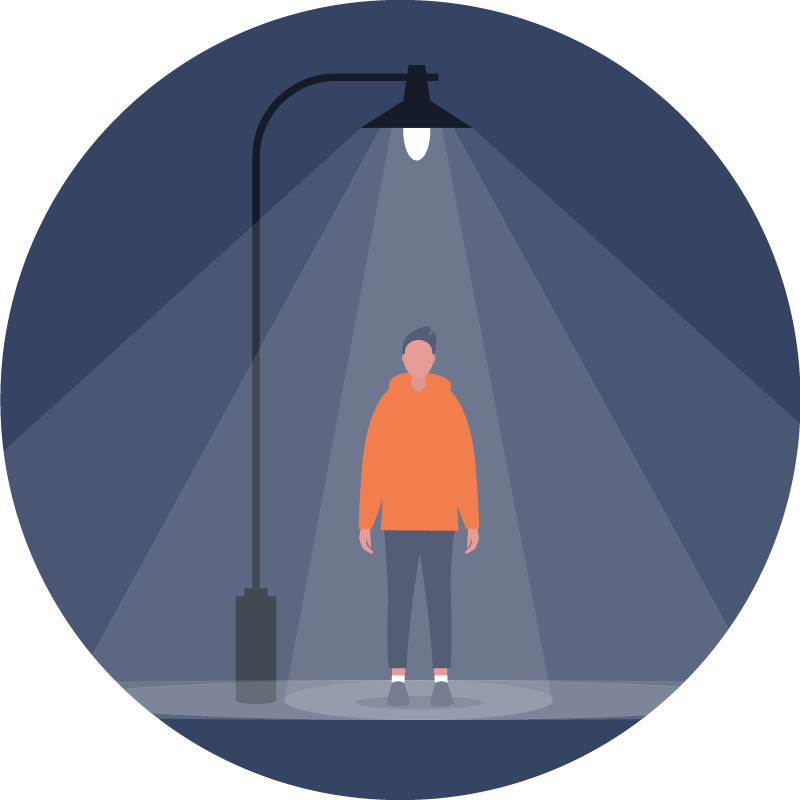
A: We advocate putting light where it is needed, during the time period it will be used, and at the levels that enhance visibility.  There are recommended levels of lighting for the purposes of safety, so people don't trip on stairs, for example.  But bad lighting can diminish security and may even attract criminals, giving them places to hide in the deep shadows created by bright, glary light (right).   Photograph © International Dark-Sky Association


 Photograph © International Dark-Sky Association

Q: Where can I find information about lighting regulations in my state or country?


A: Our Directory of Ordinance and Lighting Regulations is an excellent place to start a search for local, state, and international lighting regulations. You can also begin with the local lighting ordinances in your area.  Most city governments have their lighting ordinances on-line for the public to review.  If you are still having difficulty finding information call the IDA office and we can put you in touch with an IDA member in your area. 

Q: My city/town/township doesn't have a lighting ordinance that controls outdoor lighting.  How do I propose one?


A: Begin by reading IDA's Outdoor Lighting Ordinances and Community Standards and Getting Started with an Outdoor Lighting Ordinance.  Research outdoor lighting regulations that other similar communities have passed.  Consult IDA's Simple Guidelines for Lighting Regulations in developing an ordinance that can be adopted by your community's planning board.


Q: What constitutes a "dark sky friendly" lighting design?


A: A dark sky friendly lighting design takes into consideration several issues:

 Photograph © International Dark-Sky Association The selection of low glare lighting equipment is very important. With area lighting, such as for parking lots, the Illuminating Engineering Society calls for the use of full cutoff luminaires.  Pedestrian and entry lighting can be accomplished with full cutoff luminaires or low wattage luminaires. Facade/architectural lighting should be aimed from the top down, if at all possible; otherwise, make certain that any uplight does not escape the lines of the building.  
 Photograph © International Dark-Sky Association Landscape and security lighting should be fully shielded so that the majority of light hits the target and is shielded from normal viewing angles and does not cause glare.
 Photograph © International Dark-Sky Association Do not over light an area.  Reflected light can also contribute to sky glow, so it is important to keep lighting levels low. Follow appropriate IES guidelines, targeting the lower lighting levels and better uniformity for improved safety and security lighting.
 Photograph © International Dark-Sky Association Turn off lights when not needed. Landscape and facade lighting can easily be turned off after midnight or earlier.  Many parking lot luminaires can also be turned off after hours
It is also advisable to interview a member of the International Association of Lighting Designers, an association of independent lighting designers.  This organization does not sell equipment, but its member-knowledge of design techniques and dark sky friendly lighting design would be valuable.  Finding a lighting certified designer is another avenue for design selection, but make certain that the designer has knowledge about and experience with dark sky issues.


Q:  Does IDA have any educational resources for teachers and students?

A:Absolutely.  Our Educators & Kids Web page contains fun activities and information for students as well as presentations and lesson plans for elementary school teachers.


Q: Where does IDA get money to operate?


A: IDA is a federal 501(c)(3) nonprofit (Federal ID Number 74-2493011) membership-based organization.  Our funding relies on contributions from concerned citizens like you who become members, donate, or make us part of their planned giving portfolios.


Q. What do I get for my membership?


A.  IDA is the largest organization and the leading authority concerning the problems and solutions related to light pollution.  We are committed to preserving the beauty of our night skies through improved outdoor lighting practices.  We provide simple win-win solutions to the problems of energy waste, glare, light trespass, and the destruction of the night sky.

Your membership in IDA identifies your commitment to a more pleasant nighttime environment and makes you part of our efforts to educate manufacturers, organizations, government, business, and others around the world about the problems of and solutions to light pollution.

When you join IDA, you receive:

  • A subscription to IDA's award-winning publication, Nightscape.
  • Significant discounts on IDA material, merchandise, conferences, events, and more!
  • Access to valuable resources in the Members Only section of the Web site.
  • Opportunities to participate in local Section activities and add your voice to IDA's thousands of of dedicated and effective volunteers.
  • Direct delivery of the semimonthly IDA e-News to your e-mail inbox.


Q: Where do I send my membership form and donation?
  

A: You can join or donate to IDA online; or you can mail or fax your membership form, check, money order, or credit card information to:

The International Dark-Sky Association
3225 N. First Ave.
Tucson, Arizona  85719-2103
520-293-3198
520-293-3192 (fax)


Q: What if I forget my Username and Password?


A: Your Username is your email address. You can use the forgot password function by entering your email address then hitting submit. If you have problems logging in, please feel free to call us at 520-293-3198 or email us at ida@darksky.org.


________________________________________________________________

Q: What if my city/town is putting up a stadium near my house.  What can I do?


A:  Here are eight suggestions to help you get started;


1) Determine what your goals are. Decide whether or not you can live with the best lighting available, or whether you remain opposed to any lighting. 


2) Insist that if lighting is going to be installed, it will be the most technologically advanced lighting available, not the cheapest lighting.


3) Work for controls on when the lights will be turned off when they are not in use. Game nights may need a later hour then practice nights.


4) Find out what the field is being used for, or who is using it.  Try to seek controls on how often the lights are used. 


5) Be prepared with the lighting ordinances for your area.  Work with the builders to ensure they are aware of those ordinances.


6) Work with the neighborhood associations that may be effected by the lights.  Especially the homeowners nearest the stadium.


7) Don’t be afraid to ask questions of local lighting companies.  What is the newest technology? What are the cost differences? Do they have samples of dark sky friendly stadium lighting?


8) Follow-up, follow-up, follow-up.


To offer suggestions for this page, please contact webmaster


© IDA · Contact Us
ATTENTION!
Your login will expire in the next five minutes due to inactivity. Please click the link below to refresh your login.

Refresh my login