









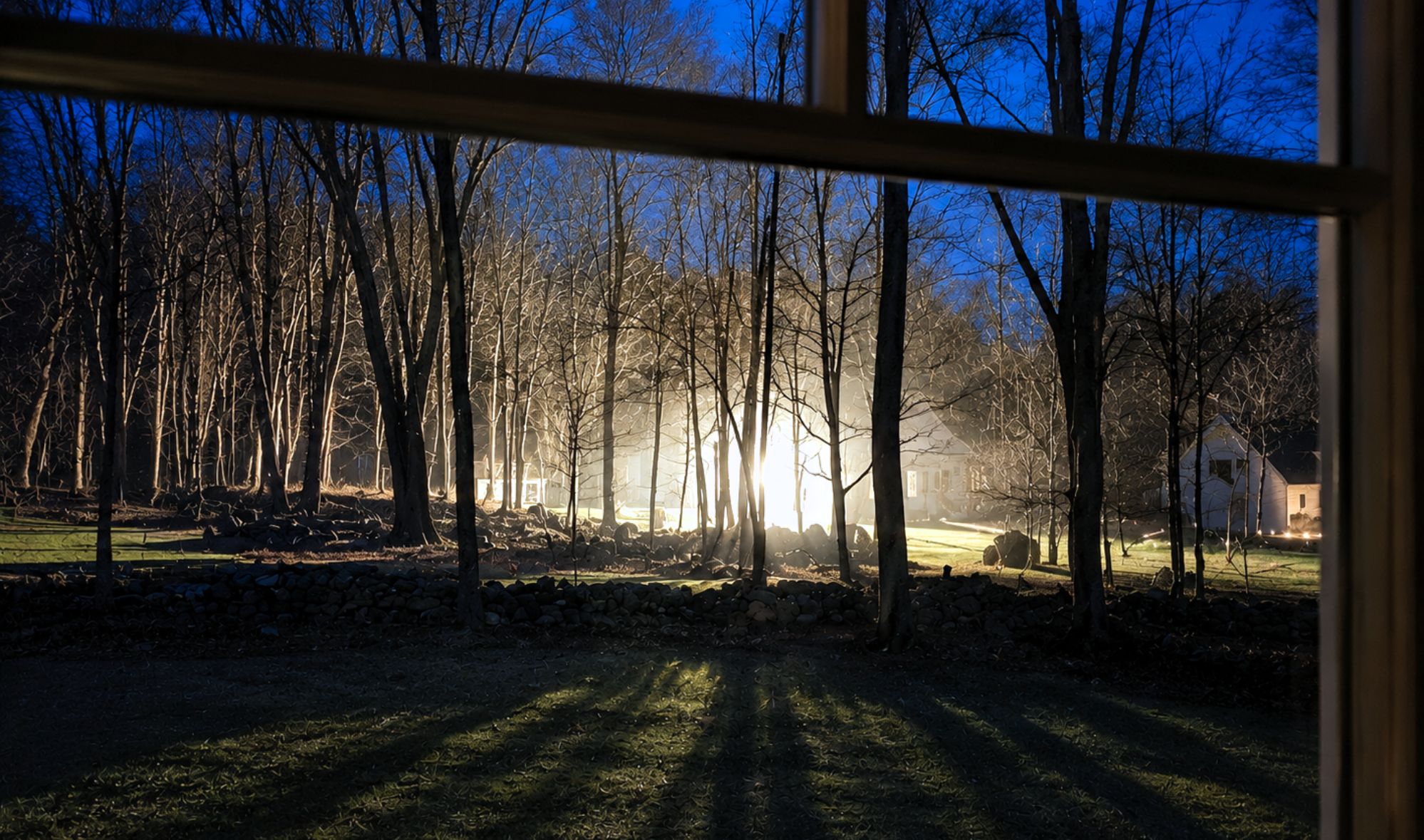
Many of us have experienced this situation: a neighbor installs a new outdoor light fixture that shines onto your property or even directly into your home. This issue, known as light trespass, can be frustrating and disruptive.
The good news is that, in most cases, your neighbor likely has no idea that their lighting is causing a problem.
While it’s natural to feel frustrated, situations involving outdoor lighting are often best viewed as an opportunity rather than a conflict. A thoughtful conversation can help someone learn about responsible lighting practices, improve the quality of life for everyone involved, and even create a new advocate for protecting the night.
Most people install outdoor lighting with good intentions. They may believe that brighter lighting improves safety or security, without realizing that poorly designed lighting can create glare, waste energy, disturb wildlife, and negatively affect their neighbors. By approaching the conversation with empathy and a willingness to educate rather than criticize, you have the best chance of achieving a positive outcome.
DarkSky does not become involved in disputes between neighbors, but we have developed the following guidance to help you approach these conversations constructively and effectively.
If the nuisance lighting is coming from a streetlight or other public infrastructure, please visit our street lighting resource page.
Before speaking with your neighbor, you may find these resources helpful:
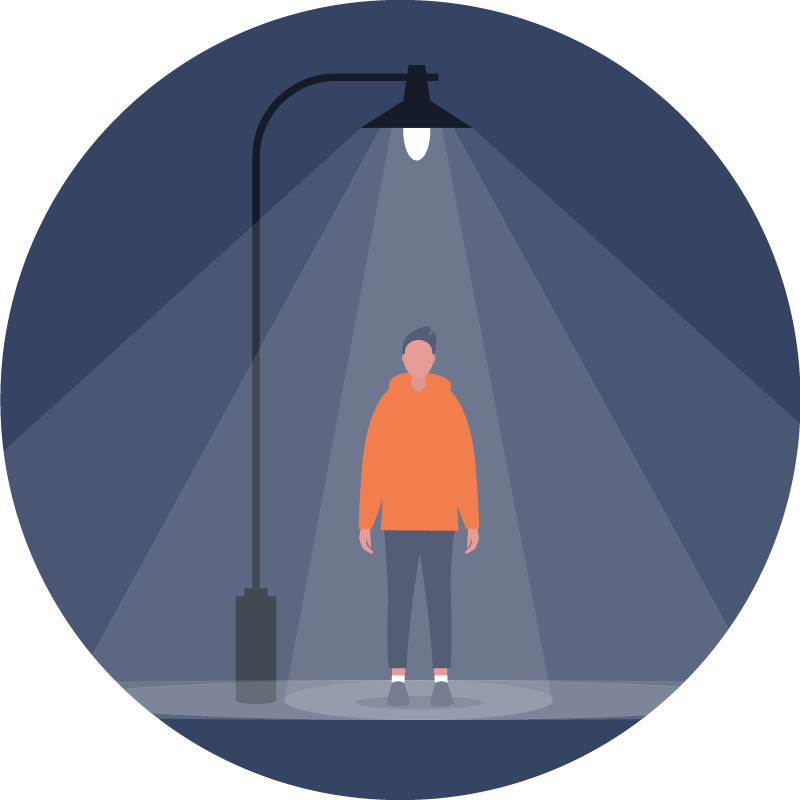
Light trespass occurs when artificial light spills beyond the property where it is intended and onto neighboring properties or into natural areas.
To be fair, your neighbor may not realize that their lighting is shining onto your property, wasting energy, increasing costs, or creating visual discomfort. Many people also believe that brighter lighting automatically improves safety, but research has not demonstrated a consistent relationship between increased lighting and reduced crime.
In fact, poorly designed lighting can create glare that reduces visibility, making it more difficult to see people, objects, and potential hazards. Responsible lighting practices can often improve visibility and comfort while reducing energy use and minimizing impacts on neighbors and wildlife.
Approach the conversation with the assumption that your neighbor simply doesn’t realize their lighting is causing a problem. A friendly discussion is almost always more effective than a confrontation.
Be tactful and understanding about your neighbor’s desire to light their property. Focus on finding a solution that works for everyone.
Recommend simple improvements such as shielding the fixture, redirecting the light, reducing brightness, or adding motion sensors so lighting is used only when needed. Offer to help identify solutions or install them if appropriate.
A conversation about outdoor lighting can be an opportunity to share helpful information and practical solutions. Introduce your neighbor to DarkSky’s educational resources, which explain how responsible lighting can improve visibility, reduce glare, save energy, and protect the nighttime environment.
You may also wish to direct them to the DarkSky Lighting Exchange, where they can browse DarkSky Approved outdoor lighting fixtures and products designed to provide effective illumination while minimizing light pollution. Having examples of attractive, high-quality lighting options can make it easier to identify a solution that works for everyone.
Consider identifying nearby homes or businesses that use well-designed, responsible lighting. Real-world examples can help demonstrate that effective lighting and dark skies can coexist.
Remember that everyone wants to feel safe and comfortable in their home. Acknowledge those concerns while explaining how quality lighting can improve visibility and reduce glare.
While light trespass can sometimes involve legal considerations, threatening legal action is rarely productive and can create lasting conflict within a neighborhood.
Ultimately, everyone wants the same thing: a comfortable, safe, and enjoyable place to live. Working together toward a solution benefits both neighbors and the broader community.